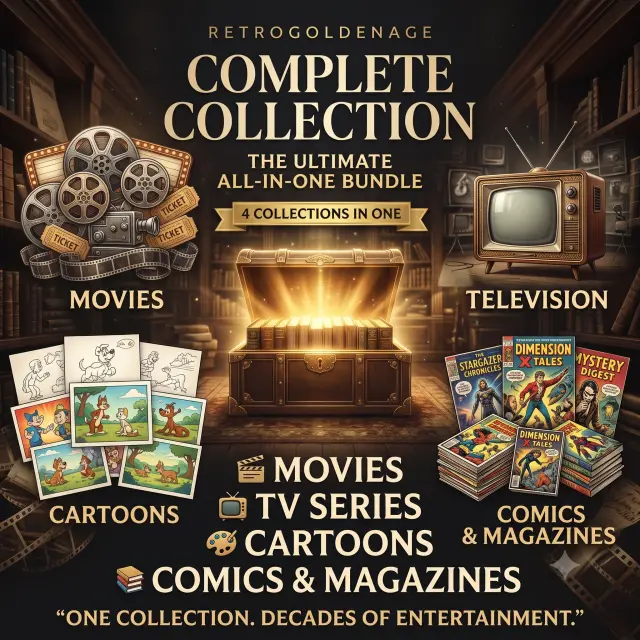
The Complete Guide to Classic Entertainment
From unforgettable films and television to hand-drawn animation, illustrated comics and vintage magazines, explore the entertainment that defined generations — and discover why its magic continues to endure today.
Every generation leaves behind entertainment that becomes part of its cultural memory. A movie seen in a neighborhood theater, a television program watched with the family, a Saturday morning cartoon or a brightly illustrated magazine can survive in memory long after the technology that originally delivered it has disappeared.
Classic entertainment gives us more than nostalgia. It offers a window into how earlier generations imagined adventure, comedy, romance, mystery, heroism and even the future.
The technology has changed dramatically, but great characters, memorable stories and distinctive creative styles continue to connect audiences across decades.
Movies
Television
Cartoons
Comics
Magazines
What Do We Mean by Classic Entertainment?
There is no single year when entertainment suddenly becomes “classic.” The term describes works that remain interesting beyond the period in which they were originally created.
Some survive because they were enormously popular. Others become fascinating because they perfectly capture the visual style, technology or social atmosphere of their era.
Together, movies, television programs, animation and printed entertainment form an enormous cultural archive.
Great stories can remain engaging long after the world around them has changed.
Costumes, sets, illustration and typography give every era its own recognizable visual identity.
Entertainment quietly preserves the language, fashions, technology and interests of the world that produced it.
Characters, music and familiar stories can remain connected to personal memories for decades.
Classic entertainment is not simply old media. It is a record of how generations dreamed, laughed, imagined and told stories.
RetroGoldenAge Archive JournalClassic Movies: When Cinema Became Magic
Few forms of entertainment shaped twentieth-century culture as powerfully as cinema.
Early filmmakers transformed a new technology into an entirely new language of storytelling. Lighting, editing, music, cinematography and performance gradually developed into techniques that audiences now take for granted.
The Power of the Movie Star
Cinema also created a new kind of celebrity. Actors could suddenly become recognizable far beyond the cities and countries where they lived.
Their hairstyles, clothing, dialogue and screen personalities influenced popular culture, while theaters turned film releases into shared public experiences.
Why Old Movies Still Matter
Watching classic cinema today allows us to see storytelling evolve in real time. Some techniques feel unmistakably vintage, while others remain surprisingly modern.
Television Brought Entertainment Into the Home
Cinema asked audiences to visit a theater. Television changed the relationship entirely by bringing entertainment directly into everyday life.
Families could gather around the same screen every week and return to familiar characters again and again.
Sitcoms, westerns, mysteries, science fiction, variety programs, dramas and game shows developed loyal audiences because television was built around repetition and familiarity.
Characters Became Familiar Faces
A film character might appear for two hours. Television characters could return for years.
That continuity created a different emotional relationship between audiences and performers — one that remains central to television storytelling today.
Classic Cartoons Turned Drawings Into Worlds
Traditional animation required an extraordinary amount of patience. Characters existed because artists created sequences of individual drawings that produced the illusion of movement when shown rapidly.
Those limitations encouraged strong silhouettes, expressive poses, exaggerated timing and distinctive backgrounds.
The result was a visual language capable of doing things live-action entertainment simply could not.
Why Animation Ages Differently
Because animation was never required to look completely realistic, beautifully designed older cartoons can retain much of their visual charm decades later.
Hand-painted backgrounds, stylized characters and physical drawing techniques give classic animation a texture that remains immediately recognizable.
One Golden Age. Countless Worlds.
A theater screen, a living-room television, a Saturday morning cartoon and a colorful newsstand cover may seem completely different, yet each became a doorway into stories that audiences remembered for generations.
Comics & Magazines: Entertainment You Could Hold
Before entertainment became an endless digital stream, stories and popular culture often arrived as physical objects.
Comic books combined illustration, dialogue and graphic design into a distinctive form of sequential storytelling. Magazines mixed journalism, photography, entertainment, advertising and illustration into carefully assembled snapshots of their era.
Even the advertisements inside them are fascinating today. Cars, radios, televisions, household products and fashions reveal what earlier generations considered exciting, modern or desirable.
The Cover Was Part of the Experience
A strong cover had to attract attention from across a crowded newsstand. Bold typography, expressive illustration and dramatic headlines became part of the identity of vintage print.
How Entertainment Changed Across the Decades
Entertainment never stood still. Each generation adopted new technology while borrowing ideas from the generation before it.
Silent cinema, illustrated publications and early recorded entertainment begin reaching mass audiences.
Cinema expands dramatically while radio, comics and illustrated magazines become major parts of popular culture.
Television enters more homes and begins changing how families experience entertainment.
Television, cinema, animation and print diversify as new genres, styles and audiences emerge.
Old entertainment gains new life as archives, restoration and digital access make forgotten material easier to rediscover.
Why Does Classic Entertainment Feel So Different?
Part of the answer is technological. Creators worked with very different tools and limitations.
Film stock affected the appearance of cinema. Early television production influenced pacing and set design. Traditional animation required physical artwork. Printed entertainment depended heavily on illustration and typography.
But technology is only part of the story.
Entertainment also reflected the rhythms of everyday life. Audiences waited for broadcasts, film releases and new magazine issues. There was often more anticipation between experiences.
Those limitations helped individual works feel like events rather than simply another item in an unlimited stream of content.
Rediscovering Forgotten Gems
The most famous classics represent only a fraction of what earlier generations watched and read.
Thousands of lesser-known movies, television programs, cartoons, comics and magazines once entertained enormous audiences before gradually disappearing from everyday attention.
Exploring those forgotten works can sometimes be more interesting than revisiting only the most famous titles.
They reveal unusual genres, forgotten performers, experimental ideas and creative styles that rarely appear in modern popular culture.
Classic Entertainment Is Also Cultural History
Entertainment is never created in isolation. Every movie, program, cartoon or magazine carries traces of the period in which it was produced.
Costumes preserve fashion. Sets preserve ideas about homes and architecture. Advertisements document consumer culture. Dialogue records changing language. Science fiction reveals how earlier generations imagined the future.
This is one reason old entertainment becomes more fascinating with time. What was once ordinary gradually becomes historical evidence.
Why the Golden Age Continues to Fascinate Us
Nostalgia explains part of our attraction to classic entertainment, but not all of it.
Someone can become fascinated by a film produced decades before they were born. A young viewer can admire traditional animation without remembering its original broadcast. A collector can become absorbed in magazines from an era they never experienced.
That happens because creative work can outlive its original moment.
Great storytelling remains great storytelling. Beautiful illustration remains beautiful. Memorable characters remain memorable.
And sometimes looking backward reveals just how much of modern entertainment was built upon ideas created generations ago.
Yesterday's Entertainment Still Has Stories to Tell
Classic movies, television, cartoons, comics and magazines are more than relics from another era. Together they form an extraordinary archive of creativity — preserving the stories, artwork, humor, imagination and culture of generations that came before us.